


 Nederlands
 Français
 Deutsch
 Italiano
 Português
 Español
Coffee guides
How to choose good coffee: origin, roast, aroma and flavor made simple
Sep
To choose good coffee, start with three questions: how do you brew it, what flavors do you like and when will you drink it? Then look at the roast, origin or blend, roast date if available, and whether you need whole beans or ground coffee. There is no universally “best” coffee; there is one that better suits your palate and brewing method.
A bag’s label can look like a small dictionary: origin, variety, process, intensity, tasting notes, roast. You do not have to master every term to make a good choice. This guide turns them into simple decisions so your next cup tastes more like the one you wanted.
How to choose coffee in one minute
- Think about your brewer: espresso, moka pot, filter and French press do not all call for the same grind.
- Choose a flavor profile: do you prefer a gentle, aromatic cup, a balanced one or more pronounced roasted notes?
- Check the roast: it gives a useful clue to a coffee’s character, although it cannot predict quality on its own.
- Read the origin and description: these tell you more than a generic promise such as “premium.”
- Buy a sensible amount: coffee changes over time, especially after grinding.
If you remember one thing, make it this: choose first by taste and brewing method; use the package to compare coffees, not as a contest of technical terms.
Before looking at the bag, think about your cup
A common mistake when buying coffee is searching for “the best” without considering what you actually drink. Someone who likes a short espresso may want different qualities from someone who brews a long filter coffee. If you normally add milk, you may want a flavor that still comes through.
Ask yourself: will I drink it black or with milk? Do I like a light mouthfeel or more body? Am I drawn to fruity nuances or do I prefer cocoa and nuts? Do I own a grinder? These answers narrow the options much more effectively than an eye-catching label.
In Seville, for example, many mornings start with a café con leche and toast. Other moments call for a black coffee after lunch. Both make sense, and it is perfectly reasonable to prefer different coffees for each. For more on the setting, read how coffee is enjoyed in Seville.
Origin and blends: what does each tell you?
Origin tells you where coffee comes from: a country, a region or, when known and shared, a farm or producer. This helps with traceability and with finding another coffee like one you enjoyed. A country’s name alone does not guarantee a fixed flavor, however. Cultivation, variety, processing, roasting and brewing all matter.
A single-origin coffee is presented as coming from one area defined by its seller. A blend combines coffees to achieve a particular and often more consistent profile. Neither is automatically superior. A single origin may let you explore a distinctive character; a well-designed blend can make an excellent everyday coffee.
When comparing bags, look for specifics. Origin and tasting characteristics tell you more than words like “select” or “intense.” The Specialty Coffee Association considers both sensory properties—flavor, aroma and mouthfeel—and information about origin, production and processing when describing a coffee’s value.
Arabica, robusta and blends: clues, not a verdict
The package may mention arabica, robusta or a combination. These are coffee species, not a ranking that tells you by itself whether you will enjoy the drink. Many arabicas are associated with varied aromatic profiles and many robustas with greater body and bitterness, but there are enormous differences within each group depending on origin, cultivation, roast and preparation.
If you are just beginning, do not buy solely on the percentage of one species. Look for a clear sensory description and try the coffee with your usual brewer. The result in your cup is more revealing than an oversimplified rule printed on a bag.
Light, medium or dark roast: finding your bearings
Roasting transforms green beans and develops the aromas we associate with coffee. Labels usually divide roasts into three broad groups, though brands do not all use exactly the same scale:
- Light: may give more room to characteristics of the origin and bright, fruity or floral profiles.
- Medium: often aims for a balance between those qualities and notes developed during roasting.
- Dark: tends to highlight roasted, bitter or chocolate-like flavors and diminish some delicate nuances.
These are guides, not promises: the bean and preparation also affect the result. According to the Specialty Coffee Association, roast level has a significant effect on flavor and is one of the clues consumers use most when choosing. If you have no firm preference, a medium roast can be a useful starting point. From there you can explore brighter or more roasted cups.
Does darker mean better? No, it means a different profile. Commercial “intensity,” roast darkness and caffeine content are also separate concepts.
Tasting notes: what do “chocolate,” “fruit” and “floral” mean?
When a description mentions cocoa, hazelnut, citrus or flowers, it usually means that the aroma or flavor reminds someone of them. It does not necessarily mean those ingredients were added. If you want flavored coffee, check the ingredients. If you want coffee without added flavoring, read tasting notes as sensory comparisons.
You do not need to detect exactly what another person did. Start with three questions as you taste: is it sweeter or more bitter? Light or full in the mouth? Does it remind you of nuts, chocolate or fruit? The SCA flavor wheel suggests moving from broad impressions toward more precise descriptors. At home, simply pay attention and find your own words.
A useful tip: taste your first sip without sugar or milk if you feel comfortable doing so. Then make the drink the way you enjoy it. Comparing the two impressions helps reveal which nuances truly interest you.
Whole beans or ground coffee: buy for your routine
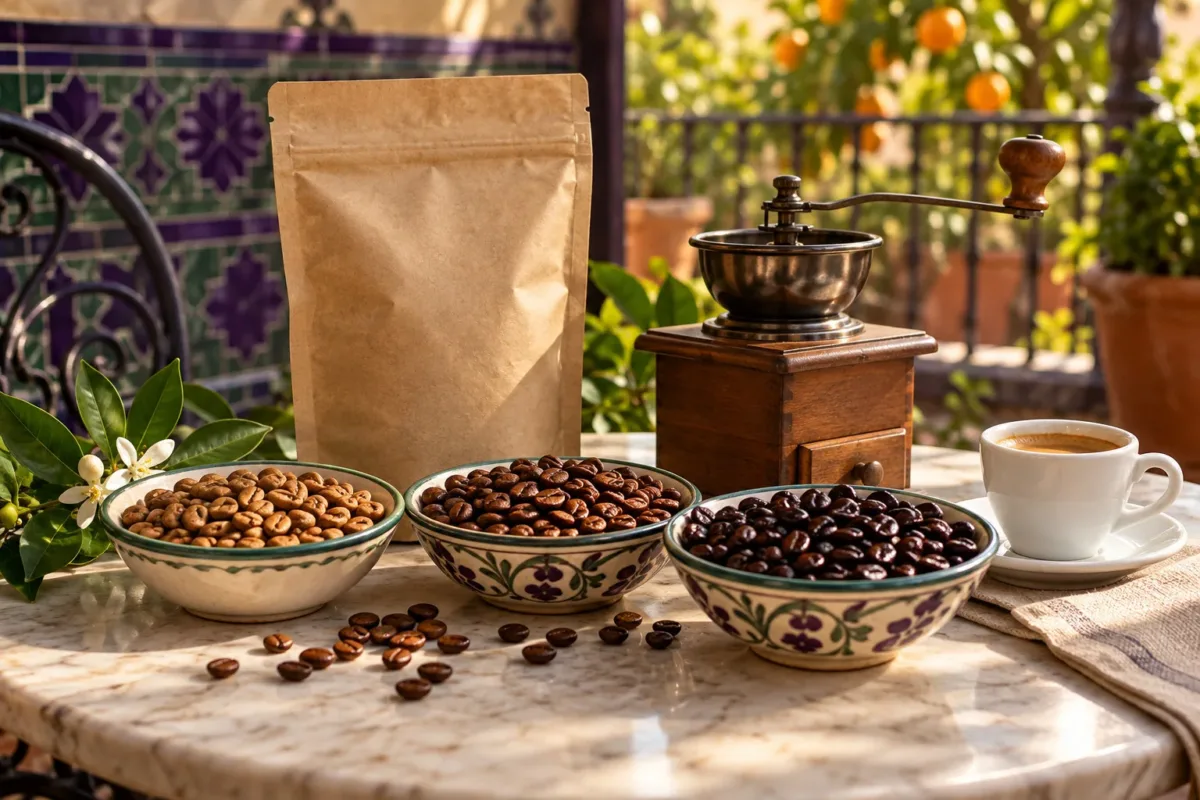
Whole beans let you adjust the grind and grind shortly before brewing. They are appealing if you have a grinder and like to experiment. Ground coffee makes your routine easier, especially if you know which brewing method it was ground for and will use it reasonably soon.
Grind matters because it changes how much of the coffee’s surface meets the water and therefore the extraction. A grind that works for one brewer may produce an unbalanced cup in another. As a practical rule, check which method the seller recommends for preground coffee; with whole beans, adjust your grinder gradually as you try each coffee.
Time matters too. The SCA explains that ground coffee loses gases and aromatic compounds much faster than whole beans. This does not make ground coffee pointless; it simply suggests buying amounts suited to your consumption and sealing the bag well.
Roast date, packaging and storage
If the bag gives a roast date, you have another reference for understanding how the coffee changes. Freshly roasted coffee does not always show its best character immediately: some brewing methods benefit from a short rest. How quickly it loses aroma also varies with the coffee, packaging and storage conditions. A fixed number of days is therefore not a universal rule.
At home, keep coffee sealed and away from heat, moisture, strong light and unnecessary openings. You can leave it in its bag if it closes well or use an appropriate container. Buying a huge bag just because the unit price looks lower will not help if it takes you too long to finish.
The practical key is turnover: buy an amount you can enjoy while it retains the profile you like. If you change coffees, note when you opened the bag, how you prepared it and what you thought. That short note is more useful than memorizing a list of origins.
A quick guide to how you drink coffee
- With milk at breakfast: look for a profile that remains noticeable with milk; begin with balanced descriptions and cocoa or nut notes if you enjoy them.
- Short and black: pay attention to the balance of sweetness, bitterness and mouthfeel. Changing the dose or extraction can transform the experience.
- As filter coffee or a long cup: you might enjoy aromatic profiles and delicate nuances; try different roast levels without assuming any one is required.
- In a moka pot: make sure the grind is suitable and do not buy a blend just because it says “Italian.” The flavor you want still comes first.
- As a gift: first find out which brewer the recipient uses. Great coffee in a format they cannot prepare is difficult to enjoy.
These are starting points, not rigid categories. If you like a cup, that experience carries more weight than any general rule.
Five common mistakes when buying coffee
- Assuming the most expensive will suit you. Price can reflect many things, but cannot decide which flavor you enjoy.
- Equating “intense” with better quality. Perceived intensity depends on several factors and does not sum up a coffee’s value.
- Ignoring your brewer. An unsuitable grind can spoil a coffee you would otherwise love.
- Buying too much. A bag sized to your pace makes it easier to drink the coffee while it is in good condition.
- Judging everything by one cup. Before rejecting a coffee, review the grind, amount, water and preparation.
Your short checklist before buying
To decide without overcomplicating things, follow this sequence: brewing method → whole beans or ground → flavor profile → roast → origin or blend → amount. If the information is clear and lets you picture the drink, you are on the right track. If not, ask what it actually tastes like and how the seller recommends brewing it.
At Café D’Sevilla, choosing a bag is more than a technical decision: it can also be an invitation to pause, share and bring a little Seville to the table. You can explore the Café D’Sevilla shop and use this guide to compare the available coffees. We do not assume there is one “Sevillian” flavor; each person creates their own, just as they create their own rituals.
Frequently asked questions about choosing coffee
How can I tell if a coffee is good before buying it?
Look for useful, verifiable information: origin or blend composition, sensory profile, roast level, format, roast date if provided and brewing recommendations. Then judge the result in your own cup. The information guides you, but your tastes and brewer complete the decision.
Are whole beans better than ground coffee?
Whole beans let you grind just before brewing and adjust grind size. Ground coffee is more convenient if you have no grinder. Choose what you can brew well and buy in an amount that suits your consumption.
Does a dark roast have more caffeine?
Roast color alone cannot tell you precisely how much caffeine will be in your cup. Species, the amount of coffee used and brewing method also matter. If you want to manage caffeine intake, read the product information and consider decaf.
Do chocolate or fruit notes mean those ingredients are in the coffee?
Usually these are descriptions of perceived aromas and flavors. Always check the ingredients on the package to see whether any flavorings or ingredients have been added.
What coffee should I buy if I am a beginner?
Start with a small amount of a clearly described, balanced coffee suited to your brewer. Note what you like about the first cup and change just one variable for your next purchase: roast, origin or flavor profile.
Sources and editorial review
For the selection criteria and sensory terms, we consulted the Specialty Coffee Association’s current definition of specialty coffee, its articles on roasting and freshness, and its flavor wheel guide. The practical buying suggestions are editorial guidance for consumers, not an assessment of particular products.
Last editorial review: September 25, 2026.