


 Nederlands
 Français
 Deutsch
 Italiano
 Português
 Español
Coffee and Seville
Coffee in Seville: history, customs and the Sevillian way to enjoy it
Sep
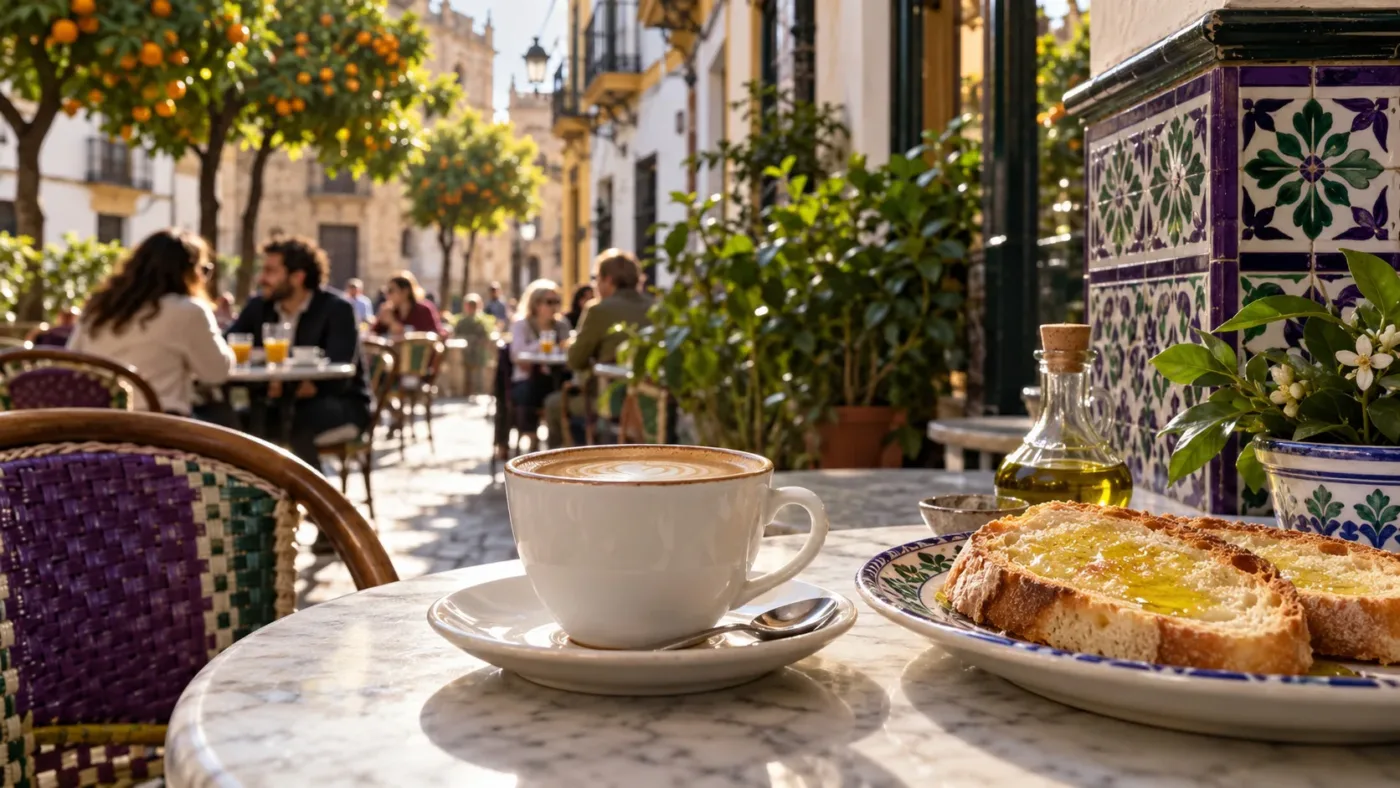
Coffee in Seville is part of the city’s everyday life: it accompanies breakfast, the midmorning break, conversations on a terrace and the leisurely time spent talking after lunch. More than a drink, it is often a simple way to meet, pause and share time.
The Sevillian way of enjoying coffee does not depend on a single recipe, but on the moment and the setting: a café con leche with toast in the morning, a cortado between tasks, a black coffee after lunch or coffee with ice when the heat intensifies.
Coffee in Seville at a glance
- In the morning: café con leche is a breakfast classic.
- At midmorning: coffee provides a short break and a meeting point.
- After lunch: it often accompanies the conversation after a meal.
- In the warmer months: coffee served with ice is a common choice.
- At any time: “meeting for a coffee” can simply be an excuse to talk.
At Café D’Sevilla, that is exactly where we begin: coffee can tell the story of a city. Our project brings together coffee, identity, aesthetics and Sevillian emotion. Learn more about that philosophy on our About us page.
Coffee and Seville: a relationship built on habit
Over the centuries, coffee became closely associated with conversation and social life in Europe. UNESCO itself has highlighted the historical role of cafés as places for meeting, exchanging ideas and enjoying cultural life. That context helps explain why a cup can mean much more than the drink it holds.
In Seville, that culture found particularly welcoming ground. Life on the streets, the climate, the terraces, the habit of unhurried conversation and the importance of bars as meeting places made coffee much more than a hot drink.
There is no need for a special occasion. In Seville, people arrange to “have a coffee” even when the coffee itself is really the excuse. What matters may be a conversation, a meeting, a rest or simply the pleasure of watching the city for a few minutes.
Sevillian breakfast often begins with coffee
The first cup of the day takes center stage. Before the streets fill up, Seville is already awake in its bars and cafés. Coffee comes from behind the counters while toast and simple breakfasts are prepared as part of the daily routine of thousands of people.
Café con leche is a morning classic, often served with toast. Olive oil, tomato, cured ham, butter or various combinations turn a seemingly simple breakfast into one of the everyday rituals that define local life.
But there is no single way to drink it. Some need a short, intense black coffee; others prefer more milk, order a cortado or linger over a cup while reading, working or talking. The choice changes; the custom remains.
A midmorning pause
The second big coffee moment arrives once the morning is under way. It is the coffee between tasks, visits, meetings or errands. Sometimes it lasts ten minutes. At other times it unexpectedly becomes half an hour of conversation.
In a city where much of life happens outside the home, coffee acts as a small boundary between one part of the day and the next. It lets you stop, collect your thoughts and carry on.
That pause feels especially Sevillian when it takes place on a terrace, in the shade, beside a square or facing the constant movement of a street in the center.
Terraces, squares and coffee outdoors
Seville is a city to observe. A façade, a square, a church, a courtyard, passersby or the changing light on buildings. That is why the experience of drinking coffee is so closely tied to its surroundings.
For much of the year, a table outside turns a cup of coffee into a small encounter with the city. The sound of conversations mixes with bicycles, footsteps, bells, waiters and people crossing the street.
From the historic center to Triana, through residential neighborhoods, markets and squares, coffee belongs to the everyday landscape. It need not be drunk in front of a monument to be a Sevillian experience. Sometimes a table, a cup and the usual rhythm of a neighborhood are enough.
After lunch: coffee and conversation
If morning coffee starts the day, the cup after lunch plays another role. It belongs to the sobremesa, the time spent talking at the table after a meal.
In Seville, as in much of Spain, a shared meal rarely ends the instant the last plate is cleared. The conversation continues. That is when the coffees arrive.
Coffee marks a transition, though not necessarily an ending. It can accompany a long conversation, a family gathering, a business lunch or a meeting with friends. Its ability to extend the moment is one reason it is so closely connected to the way we socialize.
How do you order coffee in Seville?
There is no vocabulary entirely exclusive to Seville, but there are several common ways of ordering coffee that any visitor will quickly recognize.
- Café solo: black coffee, usually served in a small cup.
- Cortado: coffee with a small amount of milk.
- Café con leche: one of the most common choices, especially at breakfast.
- Descafeinado: decaf, available black, as a cortado or with milk.
- Café con hielo: especially popular when temperatures rise; coffee is usually served alongside a glass of ice to pour it into.
Beyond the name, everyone eventually finds their own proportions. Shorter or longer, with very hot or warm milk, with a little or a lot of milk. Everyday coffee is also shaped by personal preferences.
When the heat arrives: coffee with ice
To talk about coffee in Seville is also to talk about the heat. As temperatures rise, café con hielo offers a simple answer that is deeply rooted in local habits.
It does not try to turn coffee into something else. The preparation stays straightforward: coffee in one vessel, ice in another, then the gesture of combining them just before drinking.
That small ritual is especially recognizable on terraces during the warmer months. It keeps the coffee habit alive while adapting it to the city’s climate.
Coffee as a meeting point
“Let’s meet for a coffee” is a simple phrase that can mean many things: a professional meeting, a first date, a reunion, an overdue conversation or just wanting to see someone.
Coffee has the advantage of requiring little time while allowing the meeting to stretch out. It is informal, familiar and accessible. That makes it a natural setting for social life.
In Seville, where conversation has an important place in daily life, this quality makes coffee something close and emotional. The cup matters, as does everything that happens around it.
Seville can also be told through a cup
When we think of Seville, the Giralda, the Cathedral, the Alcázar, Triana, Plaza de España, tiles, orange trees, flamenco and spring festivals immediately come to mind. They are powerful symbols, but a city is also built from small gestures.
A breakfast before work. A conversation at a marble table. A cup beside a window. A coffee after lunch. A terrace as evening falls.
These moments rarely appear on postcards, but they are part of the real experience of the city.
That is also the territory we want to explore at Café D’Sevilla: bringing the world of coffee together with Seville’s identity, aesthetics, memories and emotions.
More than selling coffee: bringing a little Seville to every cup
Café D’Sevilla began with a clear idea: we do not want Seville to be merely the place from which a product is sold. We want the city to be part of the product itself and the experience around it.
Architecture, colors, tiles, familiar expressions, monuments, neighborhoods and the way people live in the city can all inspire stories about coffee.
Opening a package, preparing a cup or giving coffee as a gift can also stir a memory. It might recall a trip, a bright morning, a narrow street in the center, an afternoon in Triana or a conversation that lasted longer than expected.
That is where coffee and the city meet.
If you want to see how we carry that idea into our products, visit the Café D’Sevilla shop.
A story that has only just begun
This is the first article on our blog and the beginning of a way to tell the story of Café D’Sevilla.
We will talk about coffee here, but also about Seville: its customs, food, neighborhoods, stories and all the details that turn a city into a feeling.
Coffee can tell us about origin, roast, aroma and flavor. But it can also tell us about people, places and memories.
We want every cup to hold a little of Seville.
This article opens a collection about coffee, culture and life in Seville. Find the next stories on the Café D’Sevilla blog.
Frequently asked questions about coffee in Seville
What is the most common coffee in Seville?
Café con leche is especially common at breakfast, though black coffee and cortado are also part of daily life.
Is it common to drink coffee after lunch?
Yes. Coffee after lunch is closely associated with the sobremesa and the conversation that continues once the meal is over.
Do people drink coffee with ice in Seville?
Yes, especially in the warmer months. It is common to order coffee with a glass of ice and pour it over the ice just before drinking.
What makes Seville’s coffee culture special?
More than any particular preparation, it is the social setting: breakfasts, terraces, meetings, breaks during work and conversations after meals. Coffee is closely linked to conversation and life on the streets.
How is Café D’Sevilla connected to the city?
Café D’Sevilla aims to unite coffee with Sevillian identity. The brand draws on Seville’s aesthetics, stories, places and emotions to create an experience that goes beyond the drink itself.
Sources and editorial review
To put the social and cultural role of cafés in context, we consulted UNESCO’s article “Cafés: A rich blend of cultures”, which examines the development of cafés as places for meeting, conversation and cultural exchange.
Last editorial review: September 25, 2026.